Skip to Content
Hico
  • Accueil
  • Magasin
  • Division Pro-Racing
  • À propos de nous
  • Guides Techniques
  • Contactez-nous
  • 0
  • Tél : +1 (321) 209-0815 WA : +13213337402

  • Follow us
  • English (CA) English (UK) English (US) Français (CA) Português (BR) Español (América Latina)
  • Sign in
  • Contactez-nous
Hico
  • 0
    • Accueil
    • Magasin
    • Division Pro-Racing
    • À propos de nous
    • Guides Techniques
    • Contactez-nous
  • Tél : +1 (321) 209-0815 WA : +13213337402

  • Follow us
  • English (CA) English (UK) English (US) Français (CA) Português (BR) Español (América Latina)
  • Sign in
  • Contactez-nous

Common Signs of Bad Transmission Seals to Watch For

Identify fluid leak colors, low-pressure symptoms, and slipping gears before costly transmission damage occurs.
  • ​Technical Guides
  • Common Signs of Bad Transmission Seals to Watch For
  • October 14, 2026 par
    Roger Flores
    | No comments yet
    transmission seals, fluid leak

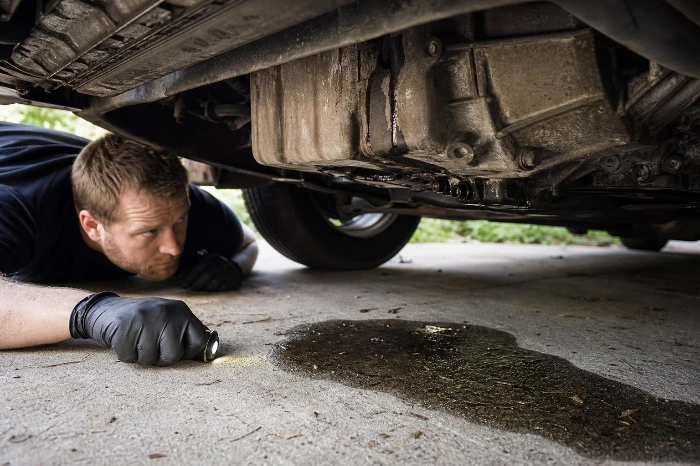
    Most transmission problems don't start with a dramatic breakdown on the highway. They start with a few drops of red fluid on the driveway that nobody bothers to investigate. Transmission seals are cheap parts, often just a few dollars each, but when they fail, they can take an expensive component down with them.

    The frustrating part is that seal failure is usually slow and fairly easy to spot if you know what to look for. A seal that weeps for months gives you plenty of warning before the transmission runs low enough to cause real damage. Drivers who ignore those warnings often end up paying for a rebuild instead of a gasket kit, and the price gap between those two repairs can be enormous.

    This guide walks through the most reliable signs of bad transmission seals, from what you'll see under the car to what you'll feel behind the wheel. None of it requires a lift or special tools to notice, just a little attention and a willingness to look under your vehicle once in a while.

    Understanding the Role of Transmission Seals

    A transmission is a sealed hydraulic system. Automatic transmissions in particular depend on pressurized fluid to engage clutches, operate valve bodies, cool internal parts, and lubricate gears. Seals are what keep that fluid where it belongs while allowing shafts to spin and components to move.

    You'll find several types throughout the unit:

    • Front pump seal: Sits where the torque converter meets the transmission and keeps fluid from escaping at the bell housing.
    • Rear output shaft seal: Seals the point where the driveshaft or axle exits the transmission.
    • Axle seals: On front-wheel-drive vehicles, these seal the CV axles entering the transaxle.
    • Pan gasket: Seals the fluid pan on the bottom of the transmission.
    • Shifter and sensor seals: Small O-rings around the shift shaft, speed sensors, and electrical connectors.
    • Cooler line fittings: Connections where fluid travels to and from the radiator or external cooler.

    Most of these are made from rubber compounds or synthetic materials that harden over time. Heat cycles, age, and contaminated fluid all cause them to shrink, crack, or lose flexibility. A seal on a 12-year-old vehicle with 150,000 miles has been through thousands of heating and cooling cycles, so some leakage at that point isn't surprising. What matters is catching it before fluid levels drop far enough to cause internal damage.

    Visual Indicators of Seal Deterioration

    Your eyes are the best diagnostic tool you have here. Leaks almost always show up visually before they show up in how the car drives, which gives you a real head start.

    Identifying Transmission Fluid Puddles

    Automatic transmission fluid is usually dyed red or pink when fresh. As it ages, it darkens toward brown. That color helps you tell it apart from other fluids your car might drip:

    • Red or pink, slightly oily: Transmission fluid (or power steering fluid on some older vehicles).
    • Brown to black: Engine oil, or very old transmission fluid.
    • Bright green, orange, or pink with a sweet smell: Coolant.
    • Clear and watery: Usually AC condensation, which is normal.

    Location matters too. Transmission leaks typically appear under the middle of the car, roughly below the front seats on rear-wheel-drive vehicles, or slightly behind the engine on front-wheel-drive models. A simple trick is to slide a piece of white cardboard under the car overnight. By morning, you'll see the color, size, and exact spot of any drip.

    A few drops after a week of parking might be a slow weep. A spot the size of your palm every morning means the seal is actively failing and needs attention soon.

    Checking for Wetness Around the Housing

    Not every leak drips. Many failing seals simply leave the transmission case coated in a film of fluid that attracts dirt and road grime. If you look underneath and see a dark, greasy, caked-on layer around the pan edge, output shaft, or where the axles enter, that's a strong indicator of seepage.

    Run a clean rag or paper towel along the suspect area. Reddish residue confirms transmission fluid. Pay special attention to the seam between the engine and transmission: fluid there often points to the front pump seal, which is one of the more labor-intensive repairs because the transmission usually has to come out.

    Keep in mind that fluid travels. Air flow under a moving car can push a leak several inches from its source, so the wettest spot isn't always where the seal actually failed. A mechanic may clean the area and add UV dye to the fluid to pinpoint the exact origin.

    Performance Issues Linked to Low Fluid Pressure

    Once enough fluid escapes, the transmission can't build the hydraulic pressure it needs. This is where leaks stop being a cosmetic issue and become a driving problem. Some of the most telling signs of bad transmission seals show up as changes in how the vehicle shifts and accelerates.

    Delayed Engagement and Gear Slippage

    Shift from park into drive and count. A healthy automatic engages almost immediately, usually in under a second. If you notice a pause of two or three seconds before you feel the gear catch, low fluid is a likely cause, especially when the delay is worse on cold mornings.

    Slipping feels different. You press the accelerator, the engine revs, but the car doesn't pull with matching force. It's as if the transmission briefly drops into neutral and then grabs again. This happens because the clutch packs aren't getting enough pressure to clamp fully, so they slip against each other. Every slip generates heat and wears friction material, which means the problem compounds quickly.

    Erratic Shifting and Increased RPMs

    Low fluid also throws off shift timing. You might notice hard, clunky shifts, shifts that happen later than usual, or a transmission that hunts back and forth between gears on a steady highway cruise. Some modern transmissions will go into a limp mode, locking into a single gear to protect themselves, and trigger a check engine light.

    Watch your tachometer. If your engine typically sits around 2,000 RPM at highway speed and now reads noticeably higher with no change in speed, the torque converter or clutches may be slipping. That rise in RPM without a matching rise in speed is a classic symptom of the transmission not transferring power efficiently. Combined with a visible leak, it's a strong hint that lost fluid is behind the problem.

    Auditory and Sensory Warning Signs

    Transmissions running low on fluid tend to get noisy. A whining or humming sound that rises and falls with engine speed often comes from the pump struggling to pull fluid that isn't there. You'll sometimes hear it most clearly when the car is in gear but stationary, like at a red light.

    Other sounds worth paying attention to include a buzzing noise from underneath, a clunk when shifting into drive or reverse, or grinding during gear changes. On manual transmissions, low gear oil from a failing seal can make shifts notchy and cause a growling sound that gets louder in specific gears.

    Feel matters as much as sound. Shuddering at low speeds, particularly between 30 and 45 mph, can point to torque converter problems aggravated by low or degraded fluid. Vibration through the floor or shifter during gear changes is another clue. None of these sensations prove a seal has failed on their own, but if you've already spotted fluid under the car, they confirm that the leak has progressed beyond a minor nuisance. At that point, waiting is the expensive choice.

    The Risk of Overheating and Burning Smells

    Transmission fluid does double duty as a coolant. When the level drops, the remaining fluid has to absorb more heat, and it breaks down faster as a result. This creates a cycle: less fluid means more heat, more heat degrades the fluid, and degraded fluid protects internal parts less effectively.

    A burning smell is one of the more urgent warnings in this whole list. It often smells acrid and slightly sweet, different from burning engine oil. You might catch it after a long drive, while towing, or when sitting in stop-and-go traffic on a hot day. It can mean two things, and both are bad:

    1. Leaking fluid is dripping onto a hot exhaust component and cooking off.
    2. The fluid inside the transmission is overheating and clutch material is burning.

    Check your dipstick if your vehicle has one. Healthy fluid is bright red and smells mostly neutral. Dark brown fluid with a burnt odor, or fluid with tiny metallic flecks, signals heat damage that may already have affected internal parts. Many newer vehicles have sealed transmissions without a dipstick, so a shop may need to check the level through a fill plug.

    If you smell burning fluid and see smoke, pull over and let the vehicle cool. Fluid on a hot exhaust is a genuine fire risk.

    Preventing Catastrophic Transmission Failure

    The good news is that seal problems are among the most preventable transmission failures. A few habits go a long way:

    • Look underneath monthly. A 30-second glance at your parking spot and the transmission case catches most leaks early.
    • Check fluid level and condition on schedule if your vehicle allows it, and note any changes in color or smell.
    • Follow the fluid service interval in your owner's manual. Fresh fluid keeps seals conditioned and reduces heat-related hardening. If you tow or drive in heavy traffic, use the severe-service schedule.
    • Use the correct fluid type. Modern transmissions are picky, and the wrong fluid can swell or shrink seals.
    • Don't rely on stop-leak additives long term. They can soften old seals temporarily, but they're a bandage, not a repair.
    • Fix small leaks promptly. An output shaft or axle seal is often a modest repair, while a burned-up transmission can cost thousands.

    These warning signs rarely appear all at once. Usually it's a stain on the driveway first, then a slight delay into drive, then a whine or a smell. Each stage you catch earlier saves money and stress. If you've noticed any of the signs of bad transmission seals covered here, have a qualified technician inspect the vehicle soon. A seal costs very little to replace, and the transmission it protects is one of the most expensive parts of your car.

    # Transtec
    Sign in to leave a comment
    EXEDY Transmission Friction Discs EFK210 & EFK321 | HICOStore
    OEM Friction Technology for Aisin AW50-40LE/42LE and Honda BMXA/SLXA Transmissions

    Cada embrague se ve bien en una hoja de dinamómetro hasta que la sobrepresión entra a 6,500 rpm y el tacómetro sube mientras el coche no lo hace. Ese momento generalmente envía a los constructores en busca de un embrague más fuerte, y OS Giken aparece rápidamente en esas búsquedas. Esta guía compara las opciones de doble disco y disco simple de OS Giken para construcciones de rendimiento, para que puedas hacer coincidir el hardware con cómo se conduce realmente tu coche.

    La elección importa más de lo que la mayoría de la gente espera. Elegir un embrague demasiado pequeño significa deslizamiento y superficies de fricción vidriadas en unos pocos días de pista. Elegir un embrague demasiado grande hace que el coche sea miserable en el tráfico, chirriando y agarrando como un coche de carreras en un viaje de compras. La respuesta correcta depende del par, el uso y cuánto confort diario estás dispuesto a sacrificar.

    ¿Qué hace que los embragues OS Giken sean superiores para construcciones de alta potencia?

    OS Giken has built drivetrain components in Japan for decades, and its clutches reflect a motorsport engineering mindset rather than an aftermarket bolt-on approach. The core advantage is how the clutch manages heat and clamp load together, since those two factors decide whether a clutch survives repeated high-torque launches.

    Heat is the real enemy. Every time a clutch slips during engagement, friction energy turns into heat, and once the friction material passes its working temperature, the coefficient of friction drops and slip feeds on itself. OS Giken designs spread that load across precisely machined friction surfaces and lightweight components that shed heat quickly between shifts. On multi-plate units, the energy is divided across more surface area, so each disc runs cooler under the same abuse.

    Torque capacity comes from geometry rather than brute spring pressure. Adding friction surfaces raises holding power without needing a punishing clamp load, which keeps pedal effort reasonable and reduces stress on the release bearing, fork, and crank thrust bearing. That's the engineering trade most cheap "stage" clutches get wrong: they crank up spring force and call it a day.

    The result is predictable engagement at high power levels, consistent behavior when the clutch is hot, and a component that holds its rated torque lap after lap instead of fading during the third session.

    Single Plate vs. Twin Plate OS Giken Clutch Kits: Key Differences

    The simplest way to frame it: a single plate gives you one pair of friction surfaces, and a twin plate gives you two. Doubling the friction surface roughly doubles holding capacity at a similar clamp load, but it changes how the clutch feels and behaves in every other way.

    Factor

    Single Plate

    Twin Plate

    Sensación del pedal

    Progresivo, más cerca de OEM

    Más firme, zona de acoplamiento más corta

    Acoplamiento

    Lanzamientos suaves y indulgentes

    Rápido, más carácter de encendido/apagado

    Límite de potencia

    NA moderado a fuerte y sobrealimentación leve

    Alta sobrealimentación, gran par, uso intensivo en pista

    Ruido

    Generalmente silencioso

    Algo de vibración al ralentí es normal

    Masa rotativa

    Depende de la elección del volante

    A menudo ensamblaje más ligero para revoluciones rápidas

    El Placa Simple OS Giken Amigable para la Calle

    La placa simple se adapta a motores naturalmente aspirados fuertes y configuraciones moderadamente sobrealimentadas que aún recorren millas en la calle. El acoplamiento es progresivo, por lo que arrancar en una colina o avanzar lentamente a través de un garaje no requiere movimientos quirúrgicos del pie. El esfuerzo del pedal se mantiene lo suficientemente cerca del stock como para que un pasajero no note nada inusual.

    Para un K24 bien construido que genera una buena potencia NA o un coche turbo que funciona con una sobrealimentación conservadora, una placa simple a menudo proporciona toda la potencia de sujeción necesaria. También cuesta menos comprar y mantener, lo que importa cuando estás presupuestando toda la construcción.

    El Placa Doble OS Giken Enfocada en la Pista

    La placa doble está construida para conductores que regularmente aplican un par serio a través de la transmisión. Dos discos significan mucha más capacidad de sujeción, mejor gestión del calor durante lanzamientos repetidos y estabilidad a través de largas sesiones en pista donde un solo disco comenzaría a desvanecerse.

    El compromiso es el carácter. La conexión ocurre en un rango de pedal más corto, los lanzamientos requieren más precisión, y algo de ruido de engranaje o vibraciones al ralentí es parte del trato. Los propietarios que entienden eso desde el principio tienden a amarlo. Los propietarios que esperan modales de OEM generalmente no.

    Señales de que necesitas una actualización de embrague de doble disco OS Giken

    No todas las construcciones necesitan un doble disco, pero algunas claramente lo hacen. Estos son los indicadores de que un disco simple ha alcanzado su límite:

    • Deslizamiento bajo alta presión. Si las revoluciones aumentan en tercera o cuarta marcha cuando la presión alcanza su punto máximo, especialmente una vez que todo está caliente, el embrague no puede mantener el par máximo. El deslizamiento en marchas más altas a plena carga es el síntoma clásico.

    • Par más allá de la clasificación del disco simple. Verifica la capacidad nominal del fabricante para tu kit. Si tus números de dinamómetro están cerca o por encima de esa cifra después de una actualización de turbo, inyectores más grandes o una nueva sintonización, estás funcionando sin margen. Un doble disco restaura ese margen.

    • Uso intensivo en pista. Lanzamientos duros repetidos, pasadas de drag, o largas sesiones en circuito calientan el embrague mucho más allá de lo que hace la conducción en la calle. Un olor a quemado después de una sesión o una conexión que cambia a medida que el coche se calienta apunta a sobrecarga térmica.

    • Discos vidriados o desgastados rápidamente. Sacar un disco simple que se ve brillante, azulado o desgastado después de una corta vida útil te dice que está siendo sobrecargado.

    • Aumentos de potencia planificados. Si la próxima fase de tu construcción añade un par significativo, instala el doble disco ahora en lugar de hacer el trabajo del embrague dos veces.

    Una regla útil del taller: si te preguntas si tienes suficiente embrague, probablemente necesites mirar el siguiente paso. Los embragues no fallan gradualmente cuando son pequeños. Funcionan hasta un tirón fuerte, luego no lo hacen.

    Compatibilidad del Embrague OS Giken: Honda K-Series (K20/K24) y Más Allá

    La serie K de Honda es una de las plataformas más comunes para los kits de embrague OS Giken, y por una buena razón. El K20 y el K24 responden extremadamente bien a la modificación, ya sea que se trate de construcciones NA de alta compresión que giran más allá de 8,000 rpm o configuraciones turbo que producen varias veces su salida de fábrica. El embrague de fábrica nunca fue diseñado para ninguno de los dos.

    Para las construcciones K20 que se mantienen naturalmente aspiradas, el atractivo a menudo es la masa rotativa reducida. Un embrague y un volante más ligeros permiten que el motor gire más libremente, lo que se adapta al carácter de altas revoluciones del K20 y hace que los cambios de marcha en punta de pie sean más precisos. El K24, con su desplazamiento y par adicionales, empuja el embrague más fuerte desde abajo en el rango de revoluciones, por lo que un K24 sobrealimentado es un candidato ideal para un doble plato.

    Las aplicaciones comunes de la serie K incluyen Civic Type R, Integra RSX, Civic Si y chasis de intercambio de motor como el Civic EG y EK o el S2000. Los intercambios requieren atención cuidadosa a qué transmisión estás utilizando, ya que los detalles de la campana y el eje de entrada determinan el kit correcto, no solo el código del motor.

    Más allá de Honda, OS Giken apoya una amplia gama de plataformas de rendimiento, incluidos los motores Nissan SR20 y RB, aplicaciones Toyota 2JZ y 86/GR86, motores Subaru EJ y FA, y Mitsubishi 4G63. Siempre confirma el número de parte exacto con tu motor, transmisión y año del modelo antes de hacer un pedido.

    Procedimiento de Rodaje Adecuado para Embragues Multi-Plato OS Giken

    Un nou embragatge necessita temps perquè les superfícies de fricció s'ajustin correctament amb el volant d'inèrcia, la placa de pressió i la placa intermèdia. Si saltes això, arrisques un contacte desigual, punts calents, vidrat i xerric que mai desapareix del tot. El cost de la paciència és uns quants centenars de milles. El cost de la impaciència és un altre treball d'embragatge.

    Segueix aquests passos després de la instal·lació:

    1. Confirma la instal·lació abans de conduir. Verifica el parell correcte en els cargols de la placa de pressió en un patró de creu, comprova el joc lliure del pedal i el purgat hidràulic, i assegura't que l'embragatge es desconnecti completament abans del primer viatge.

    2. Conduïu suaument durant les primeres 300 a 500 milles. Utilitza la xifra recomanada pel fabricant per al teu kit específic, i mantingues l'engranatge suau amb un accelerador moderat.

    3. Evita llançaments a ple gas i canvis agressius. No comencis amb arrossegament, no facis empentes d'embragatge, no facis descàrregues a altes revolucions durant aquest període.

    4. Varia el teu engranatge. La conducció normal d'aturada i anada amb un engranatge de revolucions moderades ajuda a que les superfícies s'assentin uniformement. La conducció mixta per la ciutat i l'autopista funciona bé.

    5. Evita el lliscament prolongat. Mantenir l'embragatge premut genera calor abans que les superfícies s'hagin ajustat correctament.

    6. Revisa l'ajust del pedal després del període de rodament. El punt d'engranatge pot desplaçar-se lleugerament a mesura que les superfícies s'assenten.

    Expecta algun soroll dels units de doble placa a ralentí. Són les plaques flotants i no és un signe d'un període de rodament incorrecte.

    Seleccionant el Soci de Transmissió de Rendiment Adequat

    La decisión entre un plato simple y un plato doble se reduce a respuestas honestas sobre tu construcción. Un plato simple mantiene el coche agradable en la calle y maneja bien configuraciones fuertes de NA y de impulso moderado. Un plato doble gana su lugar una vez que el par supera lo que un disco puede sostener de manera confiable, o cuando el calor repetido de la pista comienza a cocinar las superficies de fricción. Combina el embrague con tu cifra real de par y tu conducción real, luego dale un buen asentamiento para que dure.

    Dónde compras importa tanto como lo que compras. Las piezas de tren motriz falsificadas y del mercado gris circulan, y un embrague es el último lugar donde quieres materiales o tolerancias cuestionables. HICOStore es un distribuidor autorizado de piezas de rendimiento genuinas de OS Giken, con envío rápido a través de EE. UU. e internacionalmente. Confirma tu plataforma, elige la configuración correcta y ordena de una fuente en la que puedas confiar, porque el mejor embrague es el que nunca tienes que volver a pensar.

    Piezas de carreras, transmisión de motorsport, caja de cambios secuencial, embrague de alta potencia, distribuidor de carreras JDM.
    • Inicio
    • Sobre nosotros
    • Productos


    • Política de Privacidad Política de Reembolso y Devolución Términos de Servicio
    Follow us
    Hicostore.com is a global brand owned by HICO GROUP. In the United Kingdom and Europe, services are provided by HICOSTORE LTD (Company No. 17035559). In the United States, services are provided by Hicostore Group Holdings LLC
    English (CA) | English (UK) | English (US) | Français (CA) | Português (BR) | Español (América Latina)
    Powered by Odoo - The #1 Open Source eCommerce

    Usamos cookies para proporcionarte una mejor experiencia de usuario en este sitio web. Política de Cookies

    Solo esenciales Estoy de acuerdo