
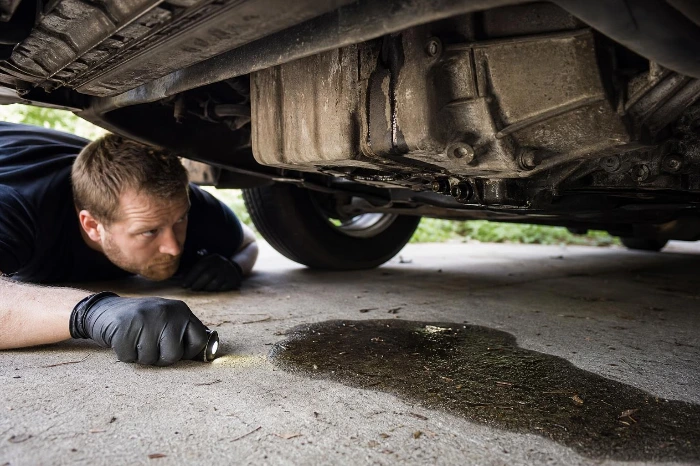
Most transmission problems don't start with a dramatic breakdown on the highway. They start with a few drops of red fluid on the driveway that nobody bothers to investigate. Transmission seals are cheap parts, often just a few dollars each, but when they fail, they can take an expensive component down with them.
The frustrating part is that seal failure is usually slow and fairly easy to spot if you know what to look for. A seal that weeps for months gives you plenty of warning before the transmission runs low enough to cause real damage. Drivers who ignore those warnings often end up paying for a rebuild instead of a gasket kit, and the price gap between those two repairs can be enormous.
This guide walks through the most reliable signs of bad transmission seals, from what you'll see under the car to what you'll feel behind the wheel. None of it requires a lift or special tools to notice, just a little attention and a willingness to look under your vehicle once in a while.
Understanding the Role of Transmission Seals
A transmission is a sealed hydraulic system. Automatic transmissions in particular depend on pressurized fluid to engage clutches, operate valve bodies, cool internal parts, and lubricate gears. Seals are what keep that fluid where it belongs while allowing shafts to spin and components to move.
You'll find several types throughout the unit:
- Front pump seal: Sits where the torque converter meets the transmission and keeps fluid from escaping at the bell housing.
- Rear output shaft seal: Seals the point where the driveshaft or axle exits the transmission.
- Axle seals: On front-wheel-drive vehicles, these seal the CV axles entering the transaxle.
- Pan gasket: Seals the fluid pan on the bottom of the transmission.
- Shifter and sensor seals: Small O-rings around the shift shaft, speed sensors, and electrical connectors.
- Cooler line fittings: Connections where fluid travels to and from the radiator or external cooler.
Most of these are made from rubber compounds or synthetic materials that harden over time. Heat cycles, age, and contaminated fluid all cause them to shrink, crack, or lose flexibility. A seal on a 12-year-old vehicle with 150,000 miles has been through thousands of heating and cooling cycles, so some leakage at that point isn't surprising. What matters is catching it before fluid levels drop far enough to cause internal damage.
Visual Indicators of Seal Deterioration
Your eyes are the best diagnostic tool you have here. Leaks almost always show up visually before they show up in how the car drives, which gives you a real head start.
Identifying Transmission Fluid Puddles
Automatic transmission fluid is usually dyed red or pink when fresh. As it ages, it darkens toward brown. That color helps you tell it apart from other fluids your car might drip:
- Red or pink, slightly oily: Transmission fluid (or power steering fluid on some older vehicles).
- Brown to black: Engine oil, or very old transmission fluid.
- Bright green, orange, or pink with a sweet smell: Coolant.
- Clear and watery: Usually AC condensation, which is normal.
Location matters too. Transmission leaks typically appear under the middle of the car, roughly below the front seats on rear-wheel-drive vehicles, or slightly behind the engine on front-wheel-drive models. A simple trick is to slide a piece of white cardboard under the car overnight. By morning, you'll see the color, size, and exact spot of any drip.
A few drops after a week of parking might be a slow weep. A spot the size of your palm every morning means the seal is actively failing and needs attention soon.
Checking for Wetness Around the Housing
Not every leak drips. Many failing seals simply leave the transmission case coated in a film of fluid that attracts dirt and road grime. If you look underneath and see a dark, greasy, caked-on layer around the pan edge, output shaft, or where the axles enter, that's a strong indicator of seepage.
Run a clean rag or paper towel along the suspect area. Reddish residue confirms transmission fluid. Pay special attention to the seam between the engine and transmission: fluid there often points to the front pump seal, which is one of the more labor-intensive repairs because the transmission usually has to come out.
Keep in mind that fluid travels. Air flow under a moving car can push a leak several inches from its source, so the wettest spot isn't always where the seal actually failed. A mechanic may clean the area and add UV dye to the fluid to pinpoint the exact origin.
Performance Issues Linked to Low Fluid Pressure
Once enough fluid escapes, the transmission can't build the hydraulic pressure it needs. This is where leaks stop being a cosmetic issue and become a driving problem. Some of the most telling signs of bad transmission seals show up as changes in how the vehicle shifts and accelerates.
Delayed Engagement and Gear Slippage
Shift from park into drive and count. A healthy automatic engages almost immediately, usually in under a second. If you notice a pause of two or three seconds before you feel the gear catch, low fluid is a likely cause, especially when the delay is worse on cold mornings.
Slipping feels different. You press the accelerator, the engine revs, but the car doesn't pull with matching force. It's as if the transmission briefly drops into neutral and then grabs again. This happens because the clutch packs aren't getting enough pressure to clamp fully, so they slip against each other. Every slip generates heat and wears friction material, which means the problem compounds quickly.
Erratic Shifting and Increased RPMs
Low fluid also throws off shift timing. You might notice hard, clunky shifts, shifts that happen later than usual, or a transmission that hunts back and forth between gears on a steady highway cruise. Some modern transmissions will go into a limp mode, locking into a single gear to protect themselves, and trigger a check engine light.
Watch your tachometer. If your engine typically sits around 2,000 RPM at highway speed and now reads noticeably higher with no change in speed, the torque converter or clutches may be slipping. That rise in RPM without a matching rise in speed is a classic symptom of the transmission not transferring power efficiently. Combined with a visible leak, it's a strong hint that lost fluid is behind the problem.
Auditory and Sensory Warning Signs
Transmissions running low on fluid tend to get noisy. A whining or humming sound that rises and falls with engine speed often comes from the pump struggling to pull fluid that isn't there. You'll sometimes hear it most clearly when the car is in gear but stationary, like at a red light.
Other sounds worth paying attention to include a buzzing noise from underneath, a clunk when shifting into drive or reverse, or grinding during gear changes. On manual transmissions, low gear oil from a failing seal can make shifts notchy and cause a growling sound that gets louder in specific gears.
Feel matters as much as sound. Shuddering at low speeds, particularly between 30 and 45 mph, can point to torque converter problems aggravated by low or degraded fluid. Vibration through the floor or shifter during gear changes is another clue. None of these sensations prove a seal has failed on their own, but if you've already spotted fluid under the car, they confirm that the leak has progressed beyond a minor nuisance. At that point, waiting is the expensive choice.
The Risk of Overheating and Burning Smells
Transmission fluid does double duty as a coolant. When the level drops, the remaining fluid has to absorb more heat, and it breaks down faster as a result. This creates a cycle: less fluid means more heat, more heat degrades the fluid, and degraded fluid protects internal parts less effectively.
A burning smell is one of the more urgent warnings in this whole list. It often smells acrid and slightly sweet, different from burning engine oil. You might catch it after a long drive, while towing, or when sitting in stop-and-go traffic on a hot day. It can mean two things, and both are bad:
- Leaking fluid is dripping onto a hot exhaust component and cooking off.
- The fluid inside the transmission is overheating and clutch material is burning.
Check your dipstick if your vehicle has one. Healthy fluid is bright red and smells mostly neutral. Dark brown fluid with a burnt odor, or fluid with tiny metallic flecks, signals heat damage that may already have affected internal parts. Many newer vehicles have sealed transmissions without a dipstick, so a shop may need to check the level through a fill plug.
If you smell burning fluid and see smoke, pull over and let the vehicle cool. Fluid on a hot exhaust is a genuine fire risk.
Preventing Catastrophic Transmission Failure
The good news is that seal problems are among the most preventable transmission failures. A few habits go a long way:
- Look underneath monthly. A 30-second glance at your parking spot and the transmission case catches most leaks early.
- Check fluid level and condition on schedule if your vehicle allows it, and note any changes in color or smell.
- Follow the fluid service interval in your owner's manual. Fresh fluid keeps seals conditioned and reduces heat-related hardening. If you tow or drive in heavy traffic, use the severe-service schedule.
- Use the correct fluid type. Modern transmissions are picky, and the wrong fluid can swell or shrink seals.
- Don't rely on stop-leak additives long term. They can soften old seals temporarily, but they're a bandage, not a repair.
- Fix small leaks promptly. An output shaft or axle seal is often a modest repair, while a burned-up transmission can cost thousands.
These warning signs rarely appear all at once. Usually it's a stain on the driveway first, then a slight delay into drive, then a whine or a smell. Each stage you catch earlier saves money and stress. If you've noticed any of the signs of bad transmission seals covered here, have a qualified technician inspect the vehicle soon. A seal costs very little to replace, and the transmission it protects is one of the most expensive parts of your car.