Skip to Content
Hico
  • Home
  • Store
  • Pro-Racing Division
  • About Us
  • Technical Guides
  • Contact us
  • 0
  • Tel: +1 (321) 209-0815 WA:+13213337402

  • Follow us
  • English (CA) English (UK) English (US) Français (CA) Português (BR) Español (América Latina)
  • Sign in
  • Contact Us
Hico
  • 0
    • Home
    • Store
    • Pro-Racing Division
    • About Us
    • Technical Guides
    • Contact us
  • Tel: +1 (321) 209-0815 WA:+13213337402

  • Follow us
  • English (CA) English (UK) English (US) Français (CA) Português (BR) Español (América Latina)
  • Sign in
  • Contact Us

Corteco Tractor & Agricultural Seals: Heavy-Duty Sealing Solutions for Farm Machinery

Heavy-Duty Agricultural Sealing: Why Standard Automotive Seals Fail in the Field
  • ​Technical Guides
  • Corteco Tractor & Agricultural Seals: Heavy-Duty Sealing Solutions for Farm Machinery
  • 19 October 2026 by
    Roger Flores


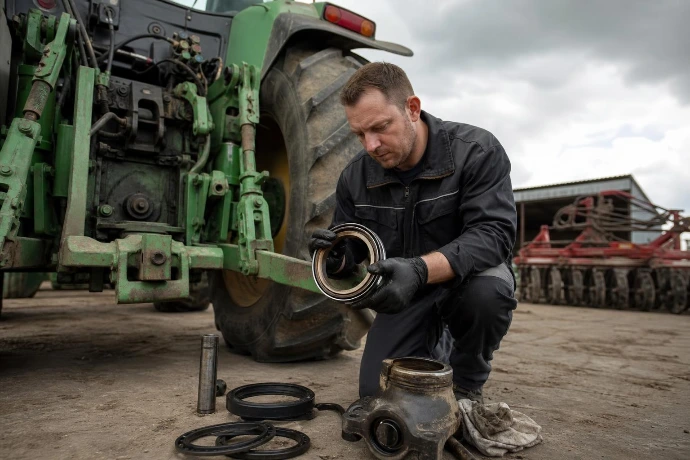
    Every spring, somewhere in a machine shed, a mechanic pulls a wheel hub and finds grease that looks more like wet concrete than lubricant. The bearing is pitted, the shaft is scored, and the seal that was supposed to prevent all of it is torn or glazed flat. It almost always happens at the worst time: a week before planting or halfway through harvest, when a tractor sitting idle costs far more than any part.

    Seals are some of the cheapest components on a tractor, yet they protect some of the most expensive ones. Bearings, gears, hydraulic pumps and final drives all depend on a thin elastomer lip holding oil in and dirt out. When that lip fails, the repair bill grows fast.

    That is why Corteco tractor and agricultural seals have earned a loyal following among dealers, independent shops and farmers who do their own wrenching. The sections below cover why farm equipment needs purpose-built sealing, how cassette designs work, where they matter most, and how to fit them so they last.

    Heavy-Duty Agricultural Sealing: Why Standard Automotive Seals Fail in the Field

    A passenger car seal lives a fairly sheltered life. It sees road spray, some dust and the occasional car wash, but the wheel spins on paved surfaces and the vehicle rarely sits submerged in anything. A tractor axle seal faces a completely different set of conditions, and a standard automotive design simply wasn't built for them.

    Start with soil. Fine silt and sand behave like lapping compound once they reach a seal lip. Each rotation drags abrasive particles across the contact surface, wearing a groove into the elastomer and eventually into the shaft itself. In wet clay, the problem gets worse: mud packs against the seal face, dries, and holds grit right where it does the most damage.

    Then there's cleaning. Pressure washers are standard practice on farms, especially before moving equipment between fields to limit weed seed and disease spread, or before servicing. A high-pressure jet aimed at a hub can force water past a single-lip seal in seconds. Once moisture gets inside, it emulsifies the grease and starts corrosion on bearing races.

    Other stresses stack on top:

    • Temperature swings from frosty mornings to hot afternoons under load

    • Shaft misalignment and runout from heavy implements and uneven ground

    • Long idle periods during the off-season, which let lips take a set and dry out

    • Chemical exposure from fertilizers, slurry and crop protection products

    A seal designed only to retain oil, without serious exclusion capability, will lose this fight. Agricultural sealing has to treat keeping contamination out as just as important as keeping lubricant in.

    Corteco Cassette Seals: Multi-Lip Protection Against Mud, Dust, and Water Ingress

    A conventional radial shaft seal is a simple idea: a metal case, a rubber lip, and a garter spring pressing that lip against a rotating shaft. It works well in clean conditions. Its weakness is that the primary sealing lip is also the first line of defense, so every grain of dirt that arrives hits the most important surface directly.

    Cassette seals solve this by changing the architecture. Instead of a lip running directly on the customer's shaft, a cassette is a self-contained unit with its own inner and outer sleeves. Several lips, both radial and axial, are arranged between those sleeves to form a labyrinth. Contaminants have to travel a winding path past multiple barriers before they get anywhere near the primary oil-retaining lip.

    Corteco's cassette designs use that labyrinth principle to stage the protection. The outer lips and dust excluders take the brunt of mud and water. Any debris that makes it past them gets trapped in grease-filled cavities between the lips. The primary lip, sitting deepest in the assembly, ends up running in a relatively clean environment and keeps sealing long after a single-lip design would have failed.

    There's a second advantage that shop technicians appreciate. Because the lips run on the cassette's own precision-finished sleeve rather than the shaft, minor wear on the original shaft matters less. The running surface comes with the seal, and its finish is controlled at the factory.

    For hubs and axles that spend their lives in slurry, standing water and dust clouds, this multi-lip approach is the difference between a seal that lasts a season and one that lasts years.

    Critical Agricultural Applications: Axles, PTO Shafts, Wheel Hubs & Transmissions

    Each major driveline component puts its own demands on a seal, and the best results come from matching the design and material to the job.

    Axles carry the full weight of the tractor plus whatever it's pulling or carrying, so they deal with heavy radial loads and some shaft deflection. Front axles on four-wheel-drive machines also sit low and close to the mud, which makes contamination exclusion the priority. This is classic cassette territory.

    PTO shafts are a different story. They spin fast, commonly at the standard 540 or 1,000 rpm, and they transmit serious torque to balers, mowers, harvesters and pumps. Higher surface speed means more heat at the lip contact, so lip geometry and compound selection have to manage friction without hardening or cracking. A PTO seal also sits right at the rear of the tractor, exposed to crop residue that wraps around the shaft.

    Wheel hubs combine rotation, load and full exposure to the elements. Field washing hits them directly, and on trailed implements they may sit unused for months. Seals here need strong exclusion and good resistance to aging.

    Transmissions and final drives keep oil in under pressure and temperature, often with additives that attack weaker elastomers. Here, material chemistry matters most.

    Corteco supplies OE-quality materials across these applications, including compounds such as NBR, HNBR and FKM chosen for their temperature range and oil compatibility. That attention to material lets the seals cope with the high torque, rotational speeds and long duty cycles typical of modern farm machinery, rather than just fitting the housing on day one.

    Replacing Heavy-Duty Seals on John Deere, Massey Ferguson, Case IH, and New Holland Equipment

    Most farm fleets are mixed. One operator might run a John Deere row-crop tractor, an older Massey Ferguson for yard work, a Case IH combine and a New Holland baler. When something leaks, nobody wants to chase three suppliers and wait two weeks for a part.

    Corteco's range is built around direct replacement for these major brands. Seals are cross-referenced to OEM part numbers, so a technician can look up the original number from the parts book or the old seal itself and find the matching Corteco equivalent. Dimensions, lip configuration and materials are specified to fit the original housing and shaft, which means no machining, no shimming and no improvising.

    A perfect fit matters more than many people realize. A seal that's slightly oversized in the bore can distort when pressed in, creating uneven lip pressure. One that's undersized can spin in its housing or weep oil around the outer diameter. Either way, the repair has to be done twice. Using a properly engineered replacement restores the original sealing performance instead of approximating it.

    A few practical tips help when ordering:

    1. Record the full part number stamped on the old seal before discarding it.

    2. Note the machine serial number, since manufacturers sometimes change seal specs mid-production.

    3. Replace mating components such as wear sleeves when the shaft surface is damaged.

    4. Order axle seals in pairs for both sides, because if one has failed, the other is usually close behind.

    With the right cross-reference, these sealing solutions for farm machinery turn a potential week-long wait into a same-day job.

    Best Practices for Heavy-Duty Seal Installation and Maintenance to Prevent Costly Downtime

    A quality seal can still fail early if it goes in wrong. A large share of premature leaks trace back to installation rather than product defects, and almost all of those are avoidable.

    Proper Tooling and Surface Preparation

    Never fit a seal with a hammer and a drift punched around the edge. That approach cocks the seal in the bore, dents the case and can dislodge the spring. Use a proper seating tool or a driver that matches the seal's outer diameter and contacts the case evenly. For cassette seals, follow the manufacturer's guidance exactly, since pressing on the wrong face can damage the internal lips.

    Before installing anything, inspect the shaft. Run a fingernail across the old lip track. If you can feel a groove, the new lip will not seal reliably on it, so fit a wear sleeve or repair the shaft. Check for burrs, rust and keyway edges that could slice the lip on the way in, and cover splines with a fitting sleeve or tape.

    Clean the housing bore thoroughly and lightly lubricate the lip with the same oil or grease the seal will retain. A dry lip running at start-up can burn in its first few minutes.

    Monitoring Leakage Paths and Wear Indicators

    After installation, check the seal area after the first few hours of work. A tiny film of oil is normal as the lip beds in; drips are not. Learn to distinguish between leaks at the lip, around the outer diameter and from nearby gaskets, since each points to a different cause.

    During routine service, watch for:

    • Fresh oil tracks on hubs or under the axle

    • Grease emulsion that looks milky, indicating water ingress

    • Heat discoloration near PTO and transmission seals

    • Bearing noise or play, often a late sign of seal failure

    Ease off the pressure washer near seal faces, too. Angle the spray away from hubs and keep the nozzle at a sensible distance.

    Choosing the right part, fitting it carefully and catching small leaks early is what keeps a tractor working through planting and harvest instead of waiting in the shop. Corteco agricultural seals give you a strong starting point with OE-matched fit and multi-lip protection, but the result depends on the hands that install them. Treat every seal job as a bearing and gearbox insurance policy, because that's exactly what it is, and your machinery will stay in the field when the weather finally cooperates


    # Agricultural Seals Case IH Cassette Seals Corteco Heavy Duty John Deere Massey Ferguson New Holland PTO Seals Tractor Seals
    TransTec Power Steering Seal Kits: Complete Guide to Rack & Pinion and Pump Rebuilds
    Learn how OE-quality TransTec power steering seal kits restore hydraulic pressure, eliminate steering rack leaks, and protect pump components.

    Every clutch looks fine on a dyno sheet until the boost comes in at 6,500 rpm and the tach climbs while the car doesn't. That moment usually sends builders hunting for a stronger clutch, and OS Giken comes up quickly in those searches. This guide compares OS Giken's twin plate and single plate options for performance builds so you can match the hardware to how your car is actually driven.

    The choice matters more than most people expect. Picking too little clutch means slip and glazed friction surfaces within a few track days. Picking too much clutch makes the car miserable in traffic, chattering and grabbing like a race car on a grocery run. The right answer depends on torque, usage, and how much daily drivability you're willing to trade.

    What Makes OS Giken Clutches Superior for High-Horsepower Builds?

    OS Giken has built drivetrain components in Japan for decades, and its clutches reflect a motorsport engineering mindset rather than an aftermarket bolt-on approach. The core advantage is how the clutch manages heat and clamp load together, since those two factors decide whether a clutch survives repeated high-torque launches.

    Heat is the real enemy. Every time a clutch slips during engagement, friction energy turns into heat, and once the friction material passes its working temperature, the coefficient of friction drops and slip feeds on itself. OS Giken designs spread that load across precisely machined friction surfaces and lightweight components that shed heat quickly between shifts. On multi-plate units, the energy is divided across more surface area, so each disc runs cooler under the same abuse.

    Torque capacity comes from geometry rather than brute spring pressure. Adding friction surfaces raises holding power without needing a punishing clamp load, which keeps pedal effort reasonable and reduces stress on the release bearing, fork, and crank thrust bearing. That's the engineering trade most cheap "stage" clutches get wrong: they crank up spring force and call it a day.

    The result is predictable engagement at high power levels, consistent behavior when the clutch is hot, and a component that holds its rated torque lap after lap instead of fading during the third session.

    Single Plate vs. Twin Plate OS Giken Clutch Kits: Key Differences

    The simplest way to frame it: a single plate gives you one pair of friction surfaces, and a twin plate gives you two. Doubling the friction surface roughly doubles holding capacity at a similar clamp load, but it changes how the clutch feels and behaves in every other way.

    Factor

    Single Plate

    Twin Plate

    Pedal feel

    Progressive, closer to OEM

    Firmer, shorter engagement zone

    Engagement

    Smooth, forgiving launches

    Quick, more on/off character

    Power limit

    Moderate to strong NA and mild boost

    High boost, big torque, heavy track use

    Noise

    Generally quiet

    Some rattle at idle is normal

    Rotating mass

    Depends on flywheel choice

    Often lighter assembly for fast revs

    The Street-Friendly OS Giken Single Plate

    The single plate suits strong naturally aspirated engines and moderately boosted setups that still see street miles. Engagement is progressive, so pulling away on a hill or creeping through a parking garage doesn't require surgical footwork. Pedal effort stays close enough to stock that a passenger won't notice anything unusual.

    For a well-built K24 making solid NA power or a turbo car running conservative boost, a single plate often provides all the holding power required. It also costs less to buy and service, which matters when you're budgeting the whole build.

    The Track-Focused OS Giken Twin Plate

    The twin plate is built for drivers who regularly put serious torque through the drivetrain. Two discs mean far more holding capacity, better heat management during repeated launches, and stability through long track sessions where a single disc would start to fade.

    The trade-off is character. Engagement happens over a shorter pedal range, launches require more precision, and some rattle or gear noise at idle is part of the deal. Owners who understand that going in tend to love it. Owners expecting OEM manners usually don't.

    Signs You Need an OS Giken Twin Plate Clutch Upgrade

    Not every build needs a twin plate, but some clearly do. These are the indicators that a single plate has reached its limit:

    • Slip under high boost. If the revs flare in third or fourth gear when boost peaks, especially once everything is warm, the clutch can't hold peak torque. Slip in higher gears at full load is the classic symptom.

    • Torque beyond the single plate rating. Check the manufacturer's rated capacity for your kit. If your dyno numbers sit near or above that figure after a turbo upgrade, bigger injectors, or a new tune, you're running without margin. A twin plate restores that buffer.

    • Heavy track usage. Repeated hard launches, drag passes, or long road course sessions heat the clutch far beyond what street driving does. A burning smell after a session or engagement that changes as the car gets hot points to thermal overload.

    • Glazed or rapidly worn discs. Pulling a single plate that looks shiny, blued, or worn thin after a short service life tells you it's being overworked.

    • Planned power increases. If the next phase of your build adds significant torque, install the twin plate now rather than doing the clutch job twice.

    A useful rule from the shop floor: if you're asking whether you have enough clutch, you probably need to look at the next step up. Clutches don't fail gradually when they're undersized. They work until one hard pull, then they don't.

    OS Giken Clutch Compatibility: Honda K-Series (K20/K24) and Beyond

    The Honda K-Series is one of the most common platforms for OS Giken clutch kits, and for good reason. The K20 and K24 respond extremely well to modification, whether that's high-compression NA builds revving past 8,000 rpm or turbo setups making several times their factory output. The factory clutch was never designed for either.

    For K20 builds that stay naturally aspirated, the appeal is often reduced rotating mass. A lighter clutch and flywheel assembly lets the engine rev more freely, which suits the K20's high-rpm character and makes heel-toe downshifts sharper. The K24, with its added displacement and torque, pushes the clutch harder from lower in the rev range, so a boosted K24 is a prime candidate for a twin plate.

    Common K-Series applications include Civic Type R, Integra RSX, Civic Si, and engine swap chassis like the EG and EK Civic or the S2000. Swaps require careful attention to which transmission you're running, since bellhousing and input shaft details determine the correct kit, not just the engine code.

    Beyond Honda, OS Giken supports a wide range of performance platforms, including Nissan SR20 and RB engines, Toyota 2JZ and 86/GR86 applications, Subaru EJ and FA engines, and Mitsubishi 4G63. Always confirm the exact part number against your engine, transmission, and model year before ordering.

    Proper Break-in Procedure for OS Giken Multi-Plate Clutches

    A new clutch needs time for the friction surfaces to mate properly with the flywheel, pressure plate, and intermediate plate. Skip this and you risk uneven contact, hot spots, glazing, and chatter that never fully goes away. The cost of patience is a few hundred miles. The cost of impatience is another clutch job.

    Follow these steps after installation:

    1. Confirm installation before driving. Verify correct torque on pressure plate bolts in a crisscross pattern, check pedal free play and hydraulic bleeding, and make sure the clutch fully disengages before the first drive.

    2. Drive gently for the first 300 to 500 miles. Use the manufacturer's recommended figure for your specific kit, and keep engagement smooth with modest throttle.

    3. Avoid full-throttle launches and aggressive shifts. No drag starts, no clutch kicks, no high-rpm dumps during this period.

    4. Vary your engagement. Normal stop-and-go driving with moderate rpm engagement helps the surfaces bed evenly. Mixed city and highway driving works well.

    5. Avoid prolonged slipping. Riding the clutch builds heat before the surfaces have properly seated.

    6. Recheck pedal adjustment after break-in. Engagement point can shift slightly as the surfaces settle.

    Expect some noise from twin plate units at idle. That's the floating plates and is not a sign of improper break-in.

    Selecting the Right Performance Drivetrain Partner

    The single plate versus twin plate decision comes down to honest answers about your build. A single plate keeps the car pleasant on the street and handles strong NA and moderate boost setups well. A twin plate earns its place once torque climbs past what one disc can reliably hold, or when repeated track heat starts cooking the friction surfaces. Match the clutch to your real torque figure and your actual driving, then give it a proper break-in so it lasts.

    Where you buy matters as much as what you buy. Counterfeit and gray-market drivetrain parts do circulate, and a clutch is the last place you want questionable materials or tolerances. HICOStore is an authorized distributor of genuine OS Giken performance parts, with fast shipping across the US and internationally. Confirm your platform, pick the right configuration, and order from a source you can trust, because the best clutch is the one you never have to think about again.

    Racing parts, motorsport transmission, sequential gearbox, high hp clutch, JDM racing distributor.
    • Home
    • About us
    • Products


    • Privacy Policy Refund and Return Policy Terms of Service
    Follow us
    Hicostore.com is a global brand owned by HICO GROUP. In the United Kingdom and Europe, services are provided by HICOSTORE LTD (Company No. 17035559). In the United States, services are provided by Hicostore Group Holdings LLC
    English (CA) | English (UK) | English (US) | Français (CA) | Português (BR) | Español (América Latina)
    Powered by Odoo - The #1 Open Source eCommerce

    We use cookies to provide you with a better user experience on this website. Cookie Policy

    Only essentials I agree