
Skip to Content
Hico
  • Accueil
  • Magasin
  • Division Pro-Racing
  • À propos de nous
  • Contactez-nous
  • Technical Guides
  • 0
  • Tel: +1 (321) 209-0815 WA:+13213337402

  • Follow us
  • English (CA) English (UK) English (US) Français (CA) Português (BR) Español (América Latina)
  • Sign in
  • Contactez-nous
Hico
  • 0
    • Accueil
    • Magasin
    • Division Pro-Racing
    • À propos de nous
    • Contactez-nous
    • Technical Guides
  • Tel: +1 (321) 209-0815 WA:+13213337402

  • Follow us
  • English (CA) English (UK) English (US) Français (CA) Português (BR) Español (América Latina)
  • Sign in
  • Contactez-nous

Why Kennol 10W-50 and 10W-60 Are Essential for Racing

Discover how Kennol's Le Mans and Grand Prix tested 10W-50 and 10W-60 synthetic oils protect boosted engines under extreme thermal stress
  • ​Technical Guides
  • Why Kennol 10W-50 and 10W-60 Are Essential for Racing
  • October 15, 2026 by
    Why Kennol 10W-50 and 10W-60 Are Essential for Racing
    Team Export

    Start writing here...

    Kennol Grand Prix Racing Oil Guide: Why 10W-50 & 10W-60 Are Essential for Track & High-Performance Engines

    Pull into the pits after a 25-minute session at Road Atlanta and pop the oil cap on a boosted engine. The smell of hot oil hits you, and the dipstick is too hot to touch. That is where cheap lubricant fails, and where a proper racing oil earns its price. Engineered on the track with a competition pedigree that includes the 24 Hours of Le Mans and the French Grand Prix, Kennol's Grand Prix racing oils explain why the 10W-50 and 10W-60 grades matter for track and high-performance engines, and how to choose between them.

    Viscosity choice on a serious build is not a matter of habit or forum folklore. It depends on bearing clearances, oil temperature, boost pressure and how hard the car gets driven. Pick the wrong grade and you can end up with a spun bearing, a worn cam lobe or a drop in oil pressure halfway through a lap. Pick the right one and the engine stays protected through every session.

    Understanding Kennol Grand Prix Racing Lubricants: Built for Extreme Conditions

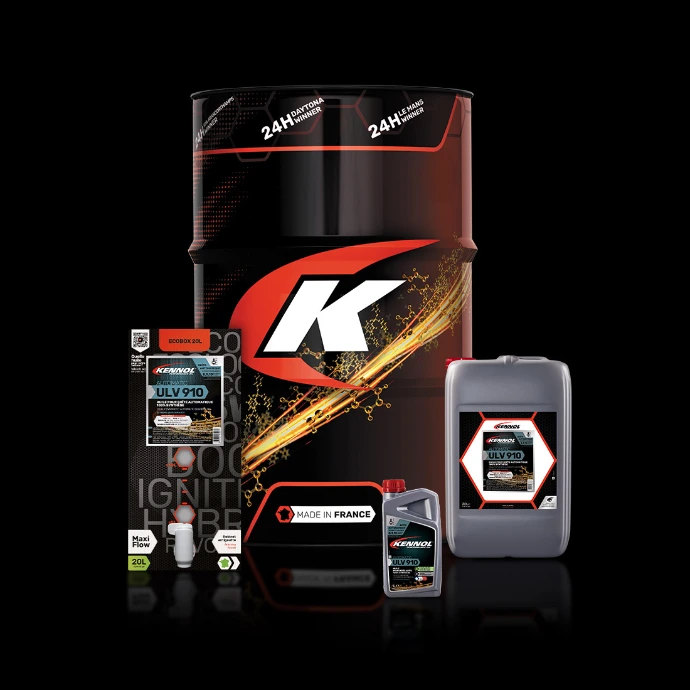
    Kennol is a premier French lubricant manufacturer with a legendary history in top-tier motorsport, including official involvement in the 24 Hours of Le Mans and French Grand Prix racing events. Its Grand Prix line was developed directly from track-proven competition experience rather than adapted from a passenger-car formula. That championship heritage shows up in the details: additive packages tuned for sustained high load, base stocks chosen to hold viscosity when temperatures climb, and formulations that expect the engine to live near redline instead of visiting it occasionally.

    A street oil is designed for cold starts, short trips and long drain intervals. A track engine has different needs. It may sit at 7,000+ RPM for minutes at a time, take repeated hard braking that sloshes oil in the pan, and run oil temperatures well past what any commute will produce. The Grand Prix range is built around those conditions.

    The result is an oil that stays predictable. Pressure stays steady lap after lap, the protective film holds up in high-G corners, and the oil does not thin out as heat soaks into the engine. Grand Prix-level engineering means designing for the worst minute of the race, not the average one.

    Kennol 10W-50 vs. 10W-60: Viscosity Selection for High-RPM and Turbocharged Builds

    Both grades share a 10W cold rating. They flow the same at startup, so the difference only appears once the engine is hot. The second number describes viscosity at operating temperature, and that is where your engine's design should decide the choice.

    FactorKennol 10W-50Kennol 10W-60
    Hot film thicknessStrongThickest
    Best forHigh-revving NA engines, moderate boostHigh boost, big power, hot-running engines
    Bearing clearancesStandard to slightly looseLooser, race-built clearances
    Oil tempsElevatedSustained extremes
    RPM characterFaster oil flow at very high RPMHigher margin under heavy load

    Use 10W-50 for high-revving naturally aspirated engines and mildly boosted setups with good oil cooling. A tight-clearance engine that revs to 8,500 RPM benefits from oil that moves quickly through small passages and the valvetrain. Think of a track-prepped Honda K-series or a lightly modified flat-six.

    Use 10W-60 when the engine runs big boost, has looser bearing clearances from a forged rebuild, or regularly sees very high oil temperatures. Turbochargers add heat in two places: the turbo's center section cooks the oil, and higher cylinder pressure loads the rod bearings harder. The thicker hot film of a 60-weight gives you more margin on both counts. Engines that already specify a 60-grade from the factory, including several German performance engines, are obvious candidates.

    When you are unsure, check what the engine builder specifies for your clearances. That number is the best guide you have.

    Thermal Stability and Shear Resistance in Full Synthetic Racing Oils

    Viscosity on the bottle only counts if the oil keeps it. Two forces work against it: heat and shear. Heat oxidizes the oil and breaks it down chemically. Shear is mechanical. Oil gets squeezed between gear teeth, cam lobes, piston rings and bearing surfaces at enormous pressure, and over time that action tears apart the long-chain molecules that give a multigrade its hot viscosity.

    Lower-quality oils rely heavily on viscosity index improvers, polymers that thicken the oil at temperature. Under sustained shear those polymers break apart, and a 50-weight can behave like a 30-weight after a few hard sessions. Your oil pressure gauge will show it before your bearings do, provided you are watching.

    Kennol's full synthetic base oils start from molecules that are more uniform and more stable than conventional mineral stocks. Because more of the viscosity comes from the base oil itself and less from additives that can shear down, the grade holds up longer under stress. Synthetic base stocks also resist oxidation at temperatures that would turn mineral oil to varnish. In practice that means oil pressure on the final lap looks much like it did on the first, and used-oil analysis shows less viscosity loss between changes.

    Protecting Engine Components Under High Boost and Extreme Oil Temperatures

    Rod and main bearings never actually touch the crankshaft in a healthy engine. They ride on a hydrodynamic wedge of pressurized oil only a few microns thick. Add boost and each combustion event pushes harder on that wedge. Add heat and the oil thins, so the wedge gets smaller. Push both far enough and metal meets metal.

    This is the job the 10W-50 and 10W-60 formulas are built for. Their higher hot viscosity keeps the film thicker at the same temperature, which buys margin when oil temperatures spike during a long, high-boost session. Instead of the film collapsing at 135°C, it keeps the parts separated.

    The camshaft and lifters face a different problem. Cam-to-follower contact happens in boundary conditions where film thickness alone is not enough. Here the anti-wear additive chemistry does the work, forming a sacrificial layer on the metal surfaces. Racing formulations typically carry stronger anti-wear packages than emissions-constrained street oils, which matters for flat-tappet engines and high-spring-pressure valvetrains.

    A few habits will help the oil do its job:

    • Monitor oil temperature, not just coolant: Oil often lags and then overshoots coolant temperature on track.

    • Add a cooldown lap: It lets the turbo and oil shed heat before shutdown.

    • Warm up fully before pushing: Even a 10W oil needs heat before full boost.

    When to Use Heavy-Viscosity Racing Oil in Street-Legal Performance Cars

    Not every street car needs a 50 or 60-weight. Putting one in a stock commuter designed for 0W-20 just costs you some efficiency and gains nothing. There are clear cases, though, where heavy-viscosity racing oil belongs in a car with plates.

    1. High-horsepower weekend builds: A turbo swap making double its factory power, a stroked V8, or a forged motor with opened-up bearing clearances. These engines see track-like loads on every hard pull, and their clearances often need a thicker hot film regardless of where they are driven.

    2. Dual-duty cars: If you drive to the track, run four sessions and drive home, run the oil the engine needs for the track. You will not swap oil in the paddock, so pick the grade for the hardest use.

    3. Hot climates and heavy loading: Towing, long mountain climbs or summer heat can push oil temperatures far above normal. Factory engines that already specify a 60-grade, common on some European performance models, fit here too.

    Keep in mind that the 10W rating means the oil is thicker on a freezing morning than a 0W or 5W. In real winter conditions, give the car a gentle warm-up. Drain intervals should also be shorter than with street oil if the car sees track time. Use oil analysis to set them instead of guessing.

    Sourcing Genuine Kennol Lubricants for Your Next Build

    Everything above assumes the oil in the bottle is what the label says. Counterfeit and gray-market lubricants show up in the performance world, and an expensive engine is the wrong place to gamble on one. Buying from an authorized source is the simplest protection you have.

    HICOStore is an authorized retailer of genuine Kennol France performance lubricants, including the Grand Prix 10W-50 and 10W-60 racing grades. It ships quickly within the US and internationally. That matters for performance shops that need stock on the shelf before a customer's build leaves the dyno, and for track enthusiasts who realize on Wednesday that they need fresh oil before a Saturday event.

    To recap the decision: choose Kennol 10W-50 for high-revving, tight-clearance and moderately boosted engines. Choose Kennol 10W-60 for big boost, looser race clearances and sustained extreme oil temperatures. In both cases you are paying for full synthetic stability tested under Le Mans conditions that holds its viscosity when cheaper oils shear down. Match the grade to your build, watch your oil temperature, and order genuine Kennol from HICOStore before your next track day.

    # 10w-50 Kennol kennol-grand-prix-racing-oil-10w50-10w60-guide
    OS Giken Clutch Kit Guide: Twin Plate vs Single Plate for Performance Builds
    Discover the differences between single, twin, and multi-plate OS Giken clutches to choose the right setup for your high-horsepower engine.

    Every clutch looks fine on a dyno sheet until the boost comes in at 6,500 rpm and the tach climbs while the car doesn't. That moment usually sends builders hunting for a stronger clutch, and OS Giken comes up quickly in those searches. This guide compares OS Giken's twin plate and single plate options for performance builds so you can match the hardware to how your car is actually driven.

    The choice matters more than most people expect. Picking too little clutch means slip and glazed friction surfaces within a few track days. Picking too much clutch makes the car miserable in traffic, chattering and grabbing like a race car on a grocery run. The right answer depends on torque, usage, and how much daily drivability you're willing to trade.

    What Makes OS Giken Clutches Superior for High-Horsepower Builds?

    OS Giken has built drivetrain components in Japan for decades, and its clutches reflect a motorsport engineering mindset rather than an aftermarket bolt-on approach. The core advantage is how the clutch manages heat and clamp load together, since those two factors decide whether a clutch survives repeated high-torque launches.

    Heat is the real enemy. Every time a clutch slips during engagement, friction energy turns into heat, and once the friction material passes its working temperature, the coefficient of friction drops and slip feeds on itself. OS Giken designs spread that load across precisely machined friction surfaces and lightweight components that shed heat quickly between shifts. On multi-plate units, the energy is divided across more surface area, so each disc runs cooler under the same abuse.

    Torque capacity comes from geometry rather than brute spring pressure. Adding friction surfaces raises holding power without needing a punishing clamp load, which keeps pedal effort reasonable and reduces stress on the release bearing, fork, and crank thrust bearing. That's the engineering trade most cheap "stage" clutches get wrong: they crank up spring force and call it a day.

    The result is predictable engagement at high power levels, consistent behavior when the clutch is hot, and a component that holds its rated torque lap after lap instead of fading during the third session.

    Single Plate vs. Twin Plate OS Giken Clutch Kits: Key Differences

    The simplest way to frame it: a single plate gives you one pair of friction surfaces, and a twin plate gives you two. Doubling the friction surface roughly doubles holding capacity at a similar clamp load, but it changes how the clutch feels and behaves in every other way.

    Factor

    Single Plate

    Twin Plate

    Pedal feel

    Progressive, closer to OEM

    Firmer, shorter engagement zone

    Engagement

    Smooth, forgiving launches

    Quick, more on/off character

    Power limit

    Moderate to strong NA and mild boost

    High boost, big torque, heavy track use

    Noise

    Generally quiet

    Some rattle at idle is normal

    Rotating mass

    Depends on flywheel choice

    Often lighter assembly for fast revs

    The Street-Friendly OS Giken Single Plate

    The single plate suits strong naturally aspirated engines and moderately boosted setups that still see street miles. Engagement is progressive, so pulling away on a hill or creeping through a parking garage doesn't require surgical footwork. Pedal effort stays close enough to stock that a passenger won't notice anything unusual.

    For a well-built K24 making solid NA power or a turbo car running conservative boost, a single plate often provides all the holding power required. It also costs less to buy and service, which matters when you're budgeting the whole build.

    The Track-Focused OS Giken Twin Plate

    The twin plate is built for drivers who regularly put serious torque through the drivetrain. Two discs mean far more holding capacity, better heat management during repeated launches, and stability through long track sessions where a single disc would start to fade.

    The trade-off is character. Engagement happens over a shorter pedal range, launches require more precision, and some rattle or gear noise at idle is part of the deal. Owners who understand that going in tend to love it. Owners expecting OEM manners usually don't.

    Signs You Need an OS Giken Twin Plate Clutch Upgrade

    Not every build needs a twin plate, but some clearly do. These are the indicators that a single plate has reached its limit:

    • Slip under high boost. If the revs flare in third or fourth gear when boost peaks, especially once everything is warm, the clutch can't hold peak torque. Slip in higher gears at full load is the classic symptom.

    • Torque beyond the single plate rating. Check the manufacturer's rated capacity for your kit. If your dyno numbers sit near or above that figure after a turbo upgrade, bigger injectors, or a new tune, you're running without margin. A twin plate restores that buffer.

    • Heavy track usage. Repeated hard launches, drag passes, or long road course sessions heat the clutch far beyond what street driving does. A burning smell after a session or engagement that changes as the car gets hot points to thermal overload.

    • Glazed or rapidly worn discs. Pulling a single plate that looks shiny, blued, or worn thin after a short service life tells you it's being overworked.

    • Planned power increases. If the next phase of your build adds significant torque, install the twin plate now rather than doing the clutch job twice.

    A useful rule from the shop floor: if you're asking whether you have enough clutch, you probably need to look at the next step up. Clutches don't fail gradually when they're undersized. They work until one hard pull, then they don't.

    OS Giken Clutch Compatibility: Honda K-Series (K20/K24) and Beyond

    The Honda K-Series is one of the most common platforms for OS Giken clutch kits, and for good reason. The K20 and K24 respond extremely well to modification, whether that's high-compression NA builds revving past 8,000 rpm or turbo setups making several times their factory output. The factory clutch was never designed for either.

    For K20 builds that stay naturally aspirated, the appeal is often reduced rotating mass. A lighter clutch and flywheel assembly lets the engine rev more freely, which suits the K20's high-rpm character and makes heel-toe downshifts sharper. The K24, with its added displacement and torque, pushes the clutch harder from lower in the rev range, so a boosted K24 is a prime candidate for a twin plate.

    Common K-Series applications include Civic Type R, Integra RSX, Civic Si, and engine swap chassis like the EG and EK Civic or the S2000. Swaps require careful attention to which transmission you're running, since bellhousing and input shaft details determine the correct kit, not just the engine code.

    Beyond Honda, OS Giken supports a wide range of performance platforms, including Nissan SR20 and RB engines, Toyota 2JZ and 86/GR86 applications, Subaru EJ and FA engines, and Mitsubishi 4G63. Always confirm the exact part number against your engine, transmission, and model year before ordering.

    Proper Break-in Procedure for OS Giken Multi-Plate Clutches

    A new clutch needs time for the friction surfaces to mate properly with the flywheel, pressure plate, and intermediate plate. Skip this and you risk uneven contact, hot spots, glazing, and chatter that never fully goes away. The cost of patience is a few hundred miles. The cost of impatience is another clutch job.

    Follow these steps after installation:

    1. Confirm installation before driving. Verify correct torque on pressure plate bolts in a crisscross pattern, check pedal free play and hydraulic bleeding, and make sure the clutch fully disengages before the first drive.

    2. Drive gently for the first 300 to 500 miles. Use the manufacturer's recommended figure for your specific kit, and keep engagement smooth with modest throttle.

    3. Avoid full-throttle launches and aggressive shifts. No drag starts, no clutch kicks, no high-rpm dumps during this period.

    4. Vary your engagement. Normal stop-and-go driving with moderate rpm engagement helps the surfaces bed evenly. Mixed city and highway driving works well.

    5. Avoid prolonged slipping. Riding the clutch builds heat before the surfaces have properly seated.

    6. Recheck pedal adjustment after break-in. Engagement point can shift slightly as the surfaces settle.

    Expect some noise from twin plate units at idle. That's the floating plates and is not a sign of improper break-in.

    Selecting the Right Performance Drivetrain Partner

    The single plate versus twin plate decision comes down to honest answers about your build. A single plate keeps the car pleasant on the street and handles strong NA and moderate boost setups well. A twin plate earns its place once torque climbs past what one disc can reliably hold, or when repeated track heat starts cooking the friction surfaces. Match the clutch to your real torque figure and your actual driving, then give it a proper break-in so it lasts.

    Where you buy matters as much as what you buy. Counterfeit and gray-market drivetrain parts do circulate, and a clutch is the last place you want questionable materials or tolerances. HICOStore is an authorized distributor of genuine OS Giken performance parts, with fast shipping across the US and internationally. Confirm your platform, pick the right configuration, and order from a source you can trust, because the best clutch is the one you never have to think about again.

    Racing parts, motorsport transmission, sequential gearbox, high hp clutch, JDM racing distributor.
    • Home
    • About us
    • Products


    • Privacy Policy Refund and Return Policy Terms of Service
    Follow us
    Hicostore.com is a global brand owned by HICO GROUP. In the United Kingdom and Europe, services are provided by HICOSTORE LTD (Company No. 17035559). In the United States, services are provided by Hicostore Group Holdings LLC
    English (CA) | English (UK) | English (US) | Français (CA) | Português (BR) | Español (América Latina)
    Powered by Odoo - The #1 Open Source eCommerce

    We use cookies to provide you a better user experience on this website. Cookie Policy

    Only essentials I agree