
Start writing here...
Kennol Grand Prix Racing Oil Guide: Why 10W-50 & 10W-60 Are Essential for Track & High-Performance Engines
Pull into the pits after a 25-minute session at Road Atlanta and pop the oil cap on a boosted engine. The smell of hot oil hits you, and the dipstick is too hot to touch. That is where cheap lubricant fails, and where a proper racing oil earns its price. Engineered on the track with a competition pedigree that includes the 24 Hours of Le Mans and the French Grand Prix, Kennol's Grand Prix racing oils explain why the 10W-50 and 10W-60 grades matter for track and high-performance engines, and how to choose between them.
Viscosity choice on a serious build is not a matter of habit or forum folklore. It depends on bearing clearances, oil temperature, boost pressure and how hard the car gets driven. Pick the wrong grade and you can end up with a spun bearing, a worn cam lobe or a drop in oil pressure halfway through a lap. Pick the right one and the engine stays protected through every session.
Understanding Kennol Grand Prix Racing Lubricants: Built for Extreme Conditions
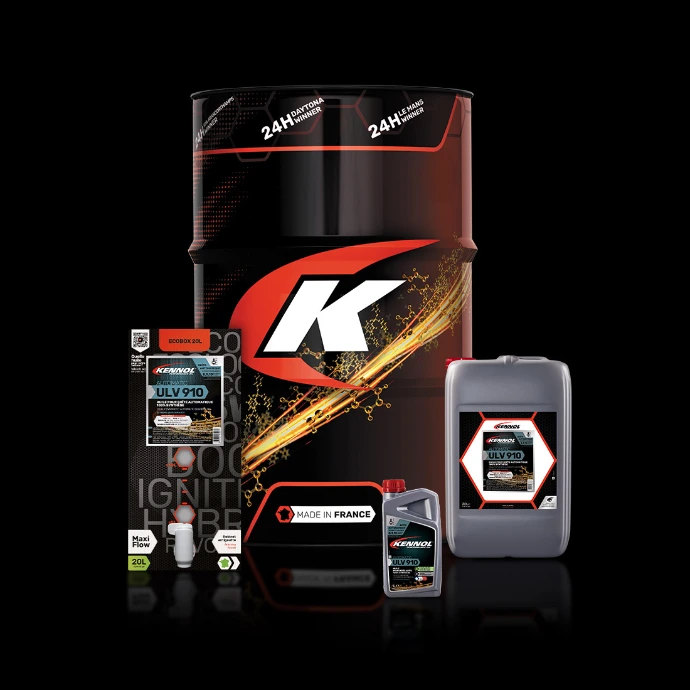
Kennol is a premier French lubricant manufacturer with a legendary history in top-tier motorsport, including official involvement in the 24 Hours of Le Mans and French Grand Prix racing events. Its Grand Prix line was developed directly from track-proven competition experience rather than adapted from a passenger-car formula. That championship heritage shows up in the details: additive packages tuned for sustained high load, base stocks chosen to hold viscosity when temperatures climb, and formulations that expect the engine to live near redline instead of visiting it occasionally.
A street oil is designed for cold starts, short trips and long drain intervals. A track engine has different needs. It may sit at 7,000+ RPM for minutes at a time, take repeated hard braking that sloshes oil in the pan, and run oil temperatures well past what any commute will produce. The Grand Prix range is built around those conditions.
The result is an oil that stays predictable. Pressure stays steady lap after lap, the protective film holds up in high-G corners, and the oil does not thin out as heat soaks into the engine. Grand Prix-level engineering means designing for the worst minute of the race, not the average one.
Kennol 10W-50 vs. 10W-60: Viscosity Selection for High-RPM and Turbocharged Builds
Both grades share a 10W cold rating. They flow the same at startup, so the difference only appears once the engine is hot. The second number describes viscosity at operating temperature, and that is where your engine's design should decide the choice.
| Factor | Kennol 10W-50 | Kennol 10W-60 |
| Hot film thickness | Strong | Thickest |
| Best for | High-revving NA engines, moderate boost | High boost, big power, hot-running engines |
| Bearing clearances | Standard to slightly loose | Looser, race-built clearances |
| Oil temps | Elevated | Sustained extremes |
| RPM character | Faster oil flow at very high RPM | Higher margin under heavy load |
Use 10W-50 for high-revving naturally aspirated engines and mildly boosted setups with good oil cooling. A tight-clearance engine that revs to 8,500 RPM benefits from oil that moves quickly through small passages and the valvetrain. Think of a track-prepped Honda K-series or a lightly modified flat-six.
Use 10W-60 when the engine runs big boost, has looser bearing clearances from a forged rebuild, or regularly sees very high oil temperatures. Turbochargers add heat in two places: the turbo's center section cooks the oil, and higher cylinder pressure loads the rod bearings harder. The thicker hot film of a 60-weight gives you more margin on both counts. Engines that already specify a 60-grade from the factory, including several German performance engines, are obvious candidates.
When you are unsure, check what the engine builder specifies for your clearances. That number is the best guide you have.
Thermal Stability and Shear Resistance in Full Synthetic Racing Oils
Viscosity on the bottle only counts if the oil keeps it. Two forces work against it: heat and shear. Heat oxidizes the oil and breaks it down chemically. Shear is mechanical. Oil gets squeezed between gear teeth, cam lobes, piston rings and bearing surfaces at enormous pressure, and over time that action tears apart the long-chain molecules that give a multigrade its hot viscosity.
Lower-quality oils rely heavily on viscosity index improvers, polymers that thicken the oil at temperature. Under sustained shear those polymers break apart, and a 50-weight can behave like a 30-weight after a few hard sessions. Your oil pressure gauge will show it before your bearings do, provided you are watching.
Kennol's full synthetic base oils start from molecules that are more uniform and more stable than conventional mineral stocks. Because more of the viscosity comes from the base oil itself and less from additives that can shear down, the grade holds up longer under stress. Synthetic base stocks also resist oxidation at temperatures that would turn mineral oil to varnish. In practice that means oil pressure on the final lap looks much like it did on the first, and used-oil analysis shows less viscosity loss between changes.
Protecting Engine Components Under High Boost and Extreme Oil Temperatures
Rod and main bearings never actually touch the crankshaft in a healthy engine. They ride on a hydrodynamic wedge of pressurized oil only a few microns thick. Add boost and each combustion event pushes harder on that wedge. Add heat and the oil thins, so the wedge gets smaller. Push both far enough and metal meets metal.
This is the job the 10W-50 and 10W-60 formulas are built for. Their higher hot viscosity keeps the film thicker at the same temperature, which buys margin when oil temperatures spike during a long, high-boost session. Instead of the film collapsing at 135°C, it keeps the parts separated.
The camshaft and lifters face a different problem. Cam-to-follower contact happens in boundary conditions where film thickness alone is not enough. Here the anti-wear additive chemistry does the work, forming a sacrificial layer on the metal surfaces. Racing formulations typically carry stronger anti-wear packages than emissions-constrained street oils, which matters for flat-tappet engines and high-spring-pressure valvetrains.
A few habits will help the oil do its job:
Monitor oil temperature, not just coolant: Oil often lags and then overshoots coolant temperature on track.
Add a cooldown lap: It lets the turbo and oil shed heat before shutdown.
Warm up fully before pushing: Even a 10W oil needs heat before full boost.
When to Use Heavy-Viscosity Racing Oil in Street-Legal Performance Cars
Not every street car needs a 50 or 60-weight. Putting one in a stock commuter designed for 0W-20 just costs you some efficiency and gains nothing. There are clear cases, though, where heavy-viscosity racing oil belongs in a car with plates.
High-horsepower weekend builds: A turbo swap making double its factory power, a stroked V8, or a forged motor with opened-up bearing clearances. These engines see track-like loads on every hard pull, and their clearances often need a thicker hot film regardless of where they are driven.
Dual-duty cars: If you drive to the track, run four sessions and drive home, run the oil the engine needs for the track. You will not swap oil in the paddock, so pick the grade for the hardest use.
Hot climates and heavy loading: Towing, long mountain climbs or summer heat can push oil temperatures far above normal. Factory engines that already specify a 60-grade, common on some European performance models, fit here too.
Keep in mind that the 10W rating means the oil is thicker on a freezing morning than a 0W or 5W. In real winter conditions, give the car a gentle warm-up. Drain intervals should also be shorter than with street oil if the car sees track time. Use oil analysis to set them instead of guessing.
Sourcing Genuine Kennol Lubricants for Your Next Build
Everything above assumes the oil in the bottle is what the label says. Counterfeit and gray-market lubricants show up in the performance world, and an expensive engine is the wrong place to gamble on one. Buying from an authorized source is the simplest protection you have.
HICOStore is an authorized retailer of genuine Kennol France performance lubricants, including the Grand Prix 10W-50 and 10W-60 racing grades. It ships quickly within the US and internationally. That matters for performance shops that need stock on the shelf before a customer's build leaves the dyno, and for track enthusiasts who realize on Wednesday that they need fresh oil before a Saturday event.
To recap the decision: choose Kennol 10W-50 for high-revving, tight-clearance and moderately boosted engines. Choose Kennol 10W-60 for big boost, looser race clearances and sustained extreme oil temperatures. In both cases you are paying for full synthetic stability tested under Le Mans conditions that holds its viscosity when cheaper oils shear down. Match the grade to your build, watch your oil temperature, and order genuine Kennol from HICOStore before your next track day.