Skip to Content
Hico
  • Accueil
  • Magasin
  • Division Pro-Racing
  • À propos de nous
  • Guides Techniques
  • Contactez-nous
  • 0
  • Tél : +1 (321) 209-0815 WA : +13213337402

  • Follow us
  • English (CA) English (UK) English (US) Français (CA) Português (BR) Español (América Latina)
  • Sign in
  • Contactez-nous
Hico
  • 0
    • Accueil
    • Magasin
    • Division Pro-Racing
    • À propos de nous
    • Guides Techniques
    • Contactez-nous
  • Tél : +1 (321) 209-0815 WA : +13213337402

  • Follow us
  • English (CA) English (UK) English (US) Français (CA) Português (BR) Español (América Latina)
  • Sign in
  • Contactez-nous

Por qué Kennol 10W-50 y 10W-60 son esenciales para las carreras

Descubre cómo los aceites sintéticos 10W-50 y 10W-60 de Kennol, probados en Le Mans y Grand Prix, protegen los motores sobrealimentados bajo estrés térmico extremo
  • ​Technical Guides
  • Por qué Kennol 10W-50 y 10W-60 son esenciales para las carreras
  • October 15, 2026 par
    Roger Flores
    | No comments yet


    Kennol Grand Prix Racing Oil Guide: Why 10W-50 & 10W-60 Are Essential for Track & High-Performance Engines

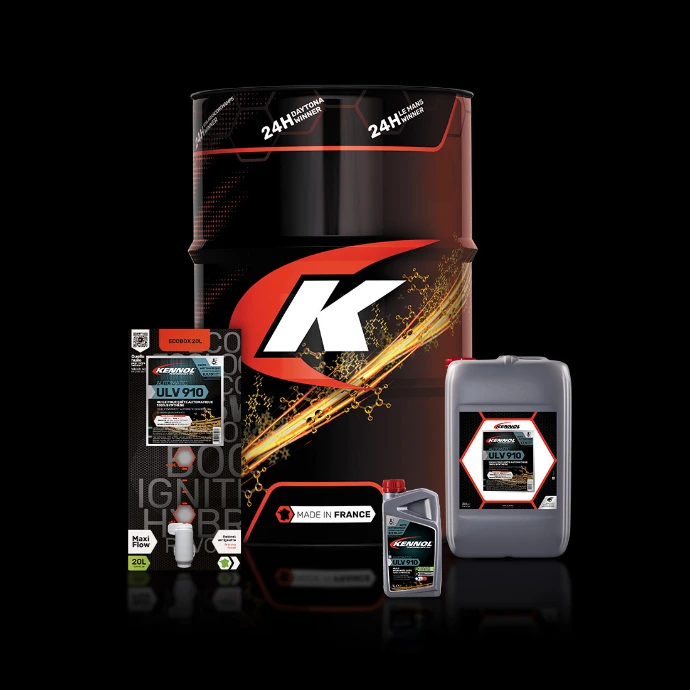
    Pull into the pits after a 25-minute session at Road Atlanta and pop the oil cap on a boosted engine. The smell of hot oil hits you, and the dipstick is too hot to touch. That is where cheap lubricant fails, and where a proper racing oil earns its price. Engineered on the track with a competition pedigree that includes the 24 Hours of Le Mans and the French Grand Prix, Kennol's Grand Prix racing oils explain why the 10W-50 and 10W-60 grades matter for track and high-performance engines, and how to choose between them.

    Viscosity choice on a serious build is not a matter of habit or forum folklore. It depends on bearing clearances, oil temperature, boost pressure and how hard the car gets driven. Pick the wrong grade and you can end up with a spun bearing, a worn cam lobe or a drop in oil pressure halfway through a lap. Pick the right one and the engine stays protected through every session.

    Understanding Kennol Grand Prix Racing Lubricants: Built for Extreme Conditions

    Kennol is a premier French lubricant manufacturer with a legendary history in top-tier motorsport, including official involvement in the 24 Hours of Le Mans and French Grand Prix racing events. Its Grand Prix line was developed directly from track-proven competition experience rather than adapted from a passenger-car formula. That championship heritage shows up in the details: additive packages tuned for sustained high load, base stocks chosen to hold viscosity when temperatures climb, and formulations that expect the engine to live near redline instead of visiting it occasionally.

    A street oil is designed for cold starts, short trips and long drain intervals. A track engine has different needs. It may sit at 7,000+ RPM for minutes at a time, take repeated hard braking that sloshes oil in the pan, and run oil temperatures well past what any commute will produce. The Grand Prix range is built around those conditions.

    The result is an oil that stays predictable. Pressure stays steady lap after lap, the protective film holds up in high-G corners, and the oil does not thin out as heat soaks into the engine. Grand Prix-level engineering means designing for the worst minute of the race, not the average one.

    Kennol 10W-50 vs. 10W-60: Viscosity Selection for High-RPM and Turbocharged Builds

    Both grades share a 10W cold rating. They flow the same at startup, so the difference only appears once the engine is hot. The second number describes viscosity at operating temperature, and that is where your engine's design should decide the choice.

    FactorKennol 10W-50Kennol 10W-60
    Hot film thicknessStrongThickest
    Best forHigh-revving NA engines, moderate boostHigh boost, big power, hot-running engines
    Bearing clearancesStandard to slightly looseLooser, race-built clearances
    Oil tempsElevatedSustained extremes
    RPM characterFaster oil flow at very high RPMHigher margin under heavy load

    Use 10W-50 for high-revving naturally aspirated engines and mildly boosted setups with good oil cooling. A tight-clearance engine that revs to 8,500 RPM benefits from oil that moves quickly through small passages and the valvetrain. Think of a track-prepped Honda K-series or a lightly modified flat-six.

    Use 10W-60 when the engine runs big boost, has looser bearing clearances from a forged rebuild, or regularly sees very high oil temperatures. Turbochargers add heat in two places: the turbo's center section cooks the oil, and higher cylinder pressure loads the rod bearings harder. The thicker hot film of a 60-weight gives you more margin on both counts. Engines that already specify a 60-grade from the factory, including several German performance engines, are obvious candidates.

    When you are unsure, check what the engine builder specifies for your clearances. That number is the best guide you have.

    Thermal Stability and Shear Resistance in Full Synthetic Racing Oils

    Viscosity on the bottle only counts if the oil keeps it. Two forces work against it: heat and shear. Heat oxidizes the oil and breaks it down chemically. Shear is mechanical. Oil gets squeezed between gear teeth, cam lobes, piston rings and bearing surfaces at enormous pressure, and over time that action tears apart the long-chain molecules that give a multigrade its hot viscosity.

    Lower-quality oils rely heavily on viscosity index improvers, polymers that thicken the oil at temperature. Under sustained shear those polymers break apart, and a 50-weight can behave like a 30-weight after a few hard sessions. Your oil pressure gauge will show it before your bearings do, provided you are watching.

    Kennol's full synthetic base oils start from molecules that are more uniform and more stable than conventional mineral stocks. Because more of the viscosity comes from the base oil itself and less from additives that can shear down, the grade holds up longer under stress. Synthetic base stocks also resist oxidation at temperatures that would turn mineral oil to varnish. In practice that means oil pressure on the final lap looks much like it did on the first, and used-oil analysis shows less viscosity loss between changes.

    Protecting Engine Components Under High Boost and Extreme Oil Temperatures

    Rod and main bearings never actually touch the crankshaft in a healthy engine. They ride on a hydrodynamic wedge of pressurized oil only a few microns thick. Add boost and each combustion event pushes harder on that wedge. Add heat and the oil thins, so the wedge gets smaller. Push both far enough and metal meets metal.

    This is the job the 10W-50 and 10W-60 formulas are built for. Their higher hot viscosity keeps the film thicker at the same temperature, which buys margin when oil temperatures spike during a long, high-boost session. Instead of the film collapsing at 135°C, it keeps the parts separated.

    The camshaft and lifters face a different problem. Cam-to-follower contact happens in boundary conditions where film thickness alone is not enough. Here the anti-wear additive chemistry does the work, forming a sacrificial layer on the metal surfaces. Racing formulations typically carry stronger anti-wear packages than emissions-constrained street oils, which matters for flat-tappet engines and high-spring-pressure valvetrains.

    A few habits will help the oil do its job:

    • Monitor oil temperature, not just coolant: Oil often lags and then overshoots coolant temperature on track.

    • Add a cooldown lap: It lets the turbo and oil shed heat before shutdown.

    • Warm up fully before pushing: Even a 10W oil needs heat before full boost.

    When to Use Heavy-Viscosity Racing Oil in Street-Legal Performance Cars

    Not every street car needs a 50 or 60-weight. Putting one in a stock commuter designed for 0W-20 just costs you some efficiency and gains nothing. There are clear cases, though, where heavy-viscosity racing oil belongs in a car with plates.

    1. High-horsepower weekend builds: A turbo swap making double its factory power, a stroked V8, or a forged motor with opened-up bearing clearances. These engines see track-like loads on every hard pull, and their clearances often need a thicker hot film regardless of where they are driven.

    2. Dual-duty cars: If you drive to the track, run four sessions and drive home, run the oil the engine needs for the track. You will not swap oil in the paddock, so pick the grade for the hardest use.

    3. Hot climates and heavy loading: Towing, long mountain climbs or summer heat can push oil temperatures far above normal. Factory engines that already specify a 60-grade, common on some European performance models, fit here too.

    Keep in mind that the 10W rating means the oil is thicker on a freezing morning than a 0W or 5W. In real winter conditions, give the car a gentle warm-up. Drain intervals should also be shorter than with street oil if the car sees track time. Use oil analysis to set them instead of guessing.

    Sourcing Genuine Kennol Lubricants for Your Next Build

    Everything above assumes the oil in the bottle is what the label says. Counterfeit and gray-market lubricants show up in the performance world, and an expensive engine is the wrong place to gamble on one. Buying from an authorized source is the simplest protection you have.

    HICOStore is an authorized retailer of genuine Kennol France performance lubricants, including the Grand Prix 10W-50 and 10W-60 racing grades. It ships quickly within the US and internationally. That matters for performance shops that need stock on the shelf before a customer's build leaves the dyno, and for track enthusiasts who realize on Wednesday that they need fresh oil before a Saturday event.

    To recap the decision: choose Kennol 10W-50 for high-revving, tight-clearance and moderately boosted engines. Choose Kennol 10W-60 for big boost, looser race clearances and sustained extreme oil temperatures. In both cases you are paying for full synthetic stability tested under Le Mans conditions that holds its viscosity when cheaper oils shear down. Match the grade to your build, watch your oil temperature, and order genuine Kennol from HICOStore before your next track day.

    # 10w-50 Kennol kennol-grand-prix-racing-oil-10w50-10w60-guide
    Sign in to leave a comment
    OS Giken Clutch Kit Guide: Twin Plate vs Single Plate for Performance Builds
    Discover the differences between single, twin, and multi-plate OS Giken clutches to choose the right setup for your high-horsepower engine.

    Cada embrague se ve bien en una hoja de dinamómetro hasta que la sobrepresión entra a 6,500 rpm y el tacómetro sube mientras el coche no lo hace. Ese momento generalmente envía a los constructores en busca de un embrague más fuerte, y OS Giken aparece rápidamente en esas búsquedas. Esta guía compara las opciones de doble disco y disco simple de OS Giken para construcciones de rendimiento, para que puedas hacer coincidir el hardware con cómo se conduce realmente tu coche.

    La elección importa más de lo que la mayoría de la gente espera. Elegir un embrague demasiado pequeño significa deslizamiento y superficies de fricción vidriadas en unos pocos días de pista. Elegir un embrague demasiado grande hace que el coche sea miserable en el tráfico, chirriando y agarrando como un coche de carreras en un viaje de compras. La respuesta correcta depende del par, el uso y cuánto confort diario estás dispuesto a sacrificar.

    ¿Qué hace que los embragues OS Giken sean superiores para construcciones de alta potencia?

    OS Giken has built drivetrain components in Japan for decades, and its clutches reflect a motorsport engineering mindset rather than an aftermarket bolt-on approach. The core advantage is how the clutch manages heat and clamp load together, since those two factors decide whether a clutch survives repeated high-torque launches.

    Heat is the real enemy. Every time a clutch slips during engagement, friction energy turns into heat, and once the friction material passes its working temperature, the coefficient of friction drops and slip feeds on itself. OS Giken designs spread that load across precisely machined friction surfaces and lightweight components that shed heat quickly between shifts. On multi-plate units, the energy is divided across more surface area, so each disc runs cooler under the same abuse.

    Torque capacity comes from geometry rather than brute spring pressure. Adding friction surfaces raises holding power without needing a punishing clamp load, which keeps pedal effort reasonable and reduces stress on the release bearing, fork, and crank thrust bearing. That's the engineering trade most cheap "stage" clutches get wrong: they crank up spring force and call it a day.

    The result is predictable engagement at high power levels, consistent behavior when the clutch is hot, and a component that holds its rated torque lap after lap instead of fading during the third session.

    Single Plate vs. Twin Plate OS Giken Clutch Kits: Key Differences

    The simplest way to frame it: a single plate gives you one pair of friction surfaces, and a twin plate gives you two. Doubling the friction surface roughly doubles holding capacity at a similar clamp load, but it changes how the clutch feels and behaves in every other way.

    Factor

    Single Plate

    Twin Plate

    Sensación del pedal

    Progresivo, más cerca de OEM

    Más firme, zona de acoplamiento más corta

    Acoplamiento

    Lanzamientos suaves y indulgentes

    Rápido, más carácter de encendido/apagado

    Límite de potencia

    NA moderado a fuerte y sobrealimentación leve

    Alta sobrealimentación, gran par, uso intensivo en pista

    Ruido

    Generalmente silencioso

    Algo de vibración al ralentí es normal

    Masa rotativa

    Depende de la elección del volante

    A menudo ensamblaje más ligero para revoluciones rápidas

    El Placa Simple OS Giken Amigable para la Calle

    La placa simple se adapta a motores naturalmente aspirados fuertes y configuraciones moderadamente sobrealimentadas que aún recorren millas en la calle. El acoplamiento es progresivo, por lo que arrancar en una colina o avanzar lentamente a través de un garaje no requiere movimientos quirúrgicos del pie. El esfuerzo del pedal se mantiene lo suficientemente cerca del stock como para que un pasajero no note nada inusual.

    Para un K24 bien construido que genera una buena potencia NA o un coche turbo que funciona con una sobrealimentación conservadora, una placa simple a menudo proporciona toda la potencia de sujeción necesaria. También cuesta menos comprar y mantener, lo que importa cuando estás presupuestando toda la construcción.

    El Placa Doble OS Giken Enfocada en la Pista

    La placa doble está construida para conductores que regularmente aplican un par serio a través de la transmisión. Dos discos significan mucha más capacidad de sujeción, mejor gestión del calor durante lanzamientos repetidos y estabilidad a través de largas sesiones en pista donde un solo disco comenzaría a desvanecerse.

    El compromiso es el carácter. La conexión ocurre en un rango de pedal más corto, los lanzamientos requieren más precisión, y algo de ruido de engranaje o vibraciones al ralentí es parte del trato. Los propietarios que entienden eso desde el principio tienden a amarlo. Los propietarios que esperan modales de OEM generalmente no.

    Señales de que necesitas una actualización de embrague de doble disco OS Giken

    No todas las construcciones necesitan un doble disco, pero algunas claramente lo hacen. Estos son los indicadores de que un disco simple ha alcanzado su límite:

    • Deslizamiento bajo alta presión. Si las revoluciones aumentan en tercera o cuarta marcha cuando la presión alcanza su punto máximo, especialmente una vez que todo está caliente, el embrague no puede mantener el par máximo. El deslizamiento en marchas más altas a plena carga es el síntoma clásico.

    • Par más allá de la clasificación del disco simple. Verifica la capacidad nominal del fabricante para tu kit. Si tus números de dinamómetro están cerca o por encima de esa cifra después de una actualización de turbo, inyectores más grandes o una nueva sintonización, estás funcionando sin margen. Un doble disco restaura ese margen.

    • Uso intensivo en pista. Lanzamientos duros repetidos, pasadas de drag, o largas sesiones en circuito calientan el embrague mucho más allá de lo que hace la conducción en la calle. Un olor a quemado después de una sesión o una conexión que cambia a medida que el coche se calienta apunta a sobrecarga térmica.

    • Discos vidriados o desgastados rápidamente. Sacar un disco simple que se ve brillante, azulado o desgastado después de una corta vida útil te dice que está siendo sobrecargado.

    • Aumentos de potencia planificados. Si la próxima fase de tu construcción añade un par significativo, instala el doble disco ahora en lugar de hacer el trabajo del embrague dos veces.

    Una regla útil del taller: si te preguntas si tienes suficiente embrague, probablemente necesites mirar el siguiente paso. Los embragues no fallan gradualmente cuando son pequeños. Funcionan hasta un tirón fuerte, luego no lo hacen.

    Compatibilidad del Embrague OS Giken: Honda K-Series (K20/K24) y Más Allá

    La serie K de Honda es una de las plataformas más comunes para los kits de embrague OS Giken, y por una buena razón. El K20 y el K24 responden extremadamente bien a la modificación, ya sea que se trate de construcciones NA de alta compresión que giran más allá de 8,000 rpm o configuraciones turbo que producen varias veces su salida de fábrica. El embrague de fábrica nunca fue diseñado para ninguno de los dos.

    Para las construcciones K20 que se mantienen naturalmente aspiradas, el atractivo a menudo es la masa rotativa reducida. Un embrague y un volante más ligeros permiten que el motor gire más libremente, lo que se adapta al carácter de altas revoluciones del K20 y hace que los cambios de marcha en punta de pie sean más precisos. El K24, con su desplazamiento y par adicionales, empuja el embrague más fuerte desde abajo en el rango de revoluciones, por lo que un K24 sobrealimentado es un candidato ideal para un doble plato.

    Las aplicaciones comunes de la serie K incluyen Civic Type R, Integra RSX, Civic Si y chasis de intercambio de motor como el Civic EG y EK o el S2000. Los intercambios requieren atención cuidadosa a qué transmisión estás utilizando, ya que los detalles de la campana y el eje de entrada determinan el kit correcto, no solo el código del motor.

    Más allá de Honda, OS Giken apoya una amplia gama de plataformas de rendimiento, incluidos los motores Nissan SR20 y RB, aplicaciones Toyota 2JZ y 86/GR86, motores Subaru EJ y FA, y Mitsubishi 4G63. Siempre confirma el número de parte exacto con tu motor, transmisión y año del modelo antes de hacer un pedido.

    Procedimiento de Rodaje Adecuado para Embragues Multi-Plato OS Giken

    Un nou embragatge necessita temps perquè les superfícies de fricció s'ajustin correctament amb el volant d'inèrcia, la placa de pressió i la placa intermèdia. Si saltes això, arrisques un contacte desigual, punts calents, vidrat i xerric que mai desapareix del tot. El cost de la paciència és uns quants centenars de milles. El cost de la impaciència és un altre treball d'embragatge.

    Segueix aquests passos després de la instal·lació:

    1. Confirma la instal·lació abans de conduir. Verifica el parell correcte en els cargols de la placa de pressió en un patró de creu, comprova el joc lliure del pedal i el purgat hidràulic, i assegura't que l'embragatge es desconnecti completament abans del primer viatge.

    2. Conduïu suaument durant les primeres 300 a 500 milles. Utilitza la xifra recomanada pel fabricant per al teu kit específic, i mantingues l'engranatge suau amb un accelerador moderat.

    3. Evita llançaments a ple gas i canvis agressius. No comencis amb arrossegament, no facis empentes d'embragatge, no facis descàrregues a altes revolucions durant aquest període.

    4. Varia el teu engranatge. La conducció normal d'aturada i anada amb un engranatge de revolucions moderades ajuda a que les superfícies s'assentin uniformement. La conducció mixta per la ciutat i l'autopista funciona bé.

    5. Evita el lliscament prolongat. Mantenir l'embragatge premut genera calor abans que les superfícies s'hagin ajustat correctament.

    6. Revisa l'ajust del pedal després del període de rodament. El punt d'engranatge pot desplaçar-se lleugerament a mesura que les superfícies s'assenten.

    Expecta algun soroll dels units de doble placa a ralentí. Són les plaques flotants i no és un signe d'un període de rodament incorrecte.

    Seleccionant el Soci de Transmissió de Rendiment Adequat

    La decisión entre un plato simple y un plato doble se reduce a respuestas honestas sobre tu construcción. Un plato simple mantiene el coche agradable en la calle y maneja bien configuraciones fuertes de NA y de impulso moderado. Un plato doble gana su lugar una vez que el par supera lo que un disco puede sostener de manera confiable, o cuando el calor repetido de la pista comienza a cocinar las superficies de fricción. Combina el embrague con tu cifra real de par y tu conducción real, luego dale un buen asentamiento para que dure.

    Dónde compras importa tanto como lo que compras. Las piezas de tren motriz falsificadas y del mercado gris circulan, y un embrague es el último lugar donde quieres materiales o tolerancias cuestionables. HICOStore es un distribuidor autorizado de piezas de rendimiento genuinas de OS Giken, con envío rápido a través de EE. UU. e internacionalmente. Confirma tu plataforma, elige la configuración correcta y ordena de una fuente en la que puedas confiar, porque el mejor embrague es el que nunca tienes que volver a pensar.

    Piezas de carreras, transmisión de motorsport, caja de cambios secuencial, embrague de alta potencia, distribuidor de carreras JDM.
    • Inicio
    • Sobre nosotros
    • Productos


    • Política de Privacidad Política de Reembolso y Devolución Términos de Servicio
    Follow us
    Hicostore.com is a global brand owned by HICO GROUP. In the United Kingdom and Europe, services are provided by HICOSTORE LTD (Company No. 17035559). In the United States, services are provided by Hicostore Group Holdings LLC
    English (CA) | English (UK) | English (US) | Français (CA) | Português (BR) | Español (América Latina)
    Powered by Odoo - The #1 Open Source eCommerce

    Usamos cookies para proporcionarte una mejor experiencia de usuario en este sitio web. Política de Cookies

    Solo esenciales Estoy de acuerdo